Vent Retrofitting & Ember-Resistant Mesh Protection
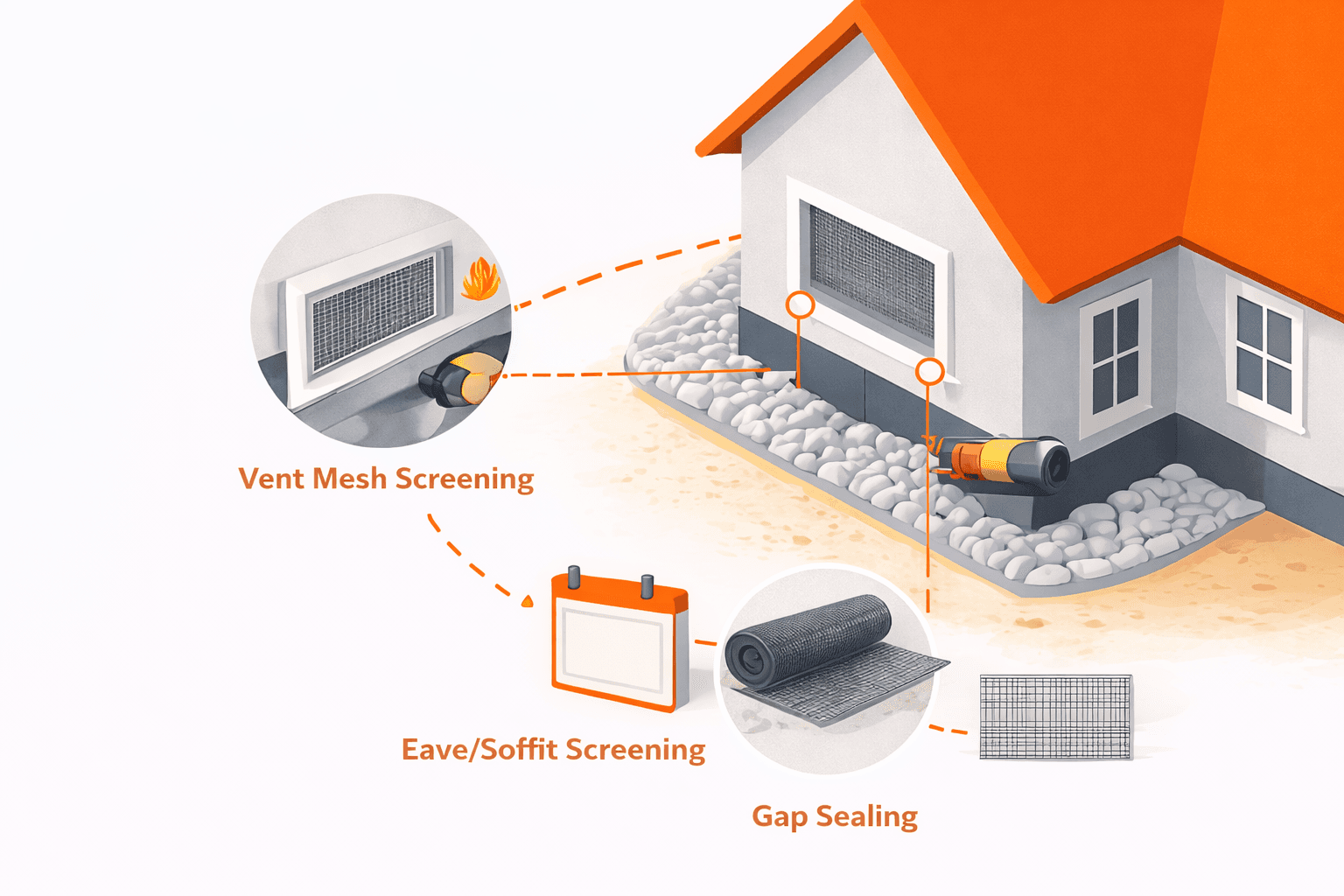
Wind-blown embers can enter through vents and small openings. We retrofit vulnerable vent locations with ember-resistant mesh and professional sealing—custom fit to your home.
What We Provide
- Ember-resistant vent mesh retrofits (foundation, gable, soffit and other vent types)
- Eave / soffit screening where needed
- Gap sealing & reinforcement at vulnerable openings (utility penetrations, trim gaps, edges)
Service Overview
Why This Service Matters
Most home ignitions in wildfires are driven by ember exposure and entry through vents/openings. Installing non-combustible, corrosion-resistant metal mesh in the recommended range is a recognized hardening step, and many homeowners upgrade further to tested ember/flame-resistant vent products for added protection.
Materials We Use
We use Wildfire Defense Mesh products for this service and focus on clean custom fitment, secure attachment, and finish details so the retrofit performs well and still looks professional. (WDM provides products described as code-compliant / Chapter 7A-related in their product documentation.)
Service Process
- 1Assessment (identify vent types + ember pathways)
- 2Custom plan (mesh selection + fitment approach)
- 3Installation (retrofit + screening + sealing)
- 4Final inspection + homeowner walkthrough
Compliance Support for This Service
We structure this scope to help homeowners move from inspection findings to documented completion.
- Address ember-entry pathways at vents, eaves, and other vulnerable openings.
- Sequence retrofit tasks to support correction notice timelines when applicable.
- Provide completion notes homeowners can reference for HOA or insurer conversations.
Requirements and timelines vary by agency, HOA rules, and property conditions.
Featured Material: Wildfire Defense Mesh (WDM)
Why we use it
Durable ember-resistant metal mesh that supports clean, professional retrofits and consistent fitment.
Specifications & Notes:
- Available in 1/16" and 1/8" mesh options (selection depends on location + airflow + maintenance)
- Manufacturer states WDM 98 is tested to ASTM E2886 for Chapter 7A vent applications (context depends on installation and vent type)
- CBC Chapter 7A vent language references State Fire Marshal listed flame/ember resistant vents for ventilation openings in WUI context
Our Work in Action
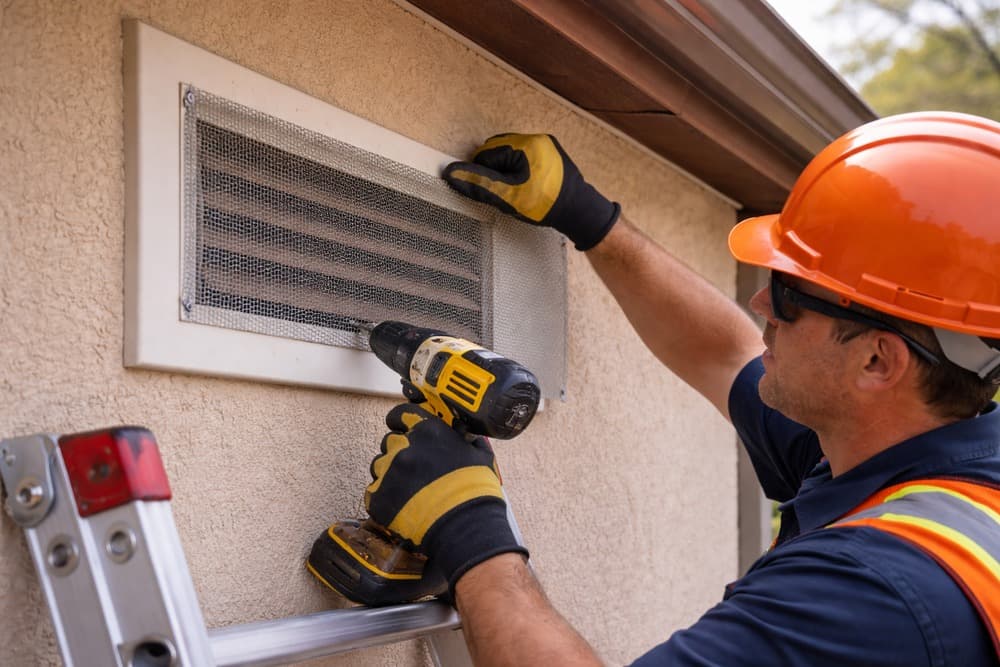
Ember-resistant vent installation
Frequently Asked Questions
Why focus on vents and openings?
During wildfire conditions, wind-blown embers can enter through vents and small gaps and ignite materials inside attics, crawlspaces, or wall cavities. IBHS research specifically evaluated ember entry through vents and how different vent styles/screens perform.
What mesh size do you install: 1/16" or 1/8"?
Both are commonly recommended ranges for ember screening. 1/16" can block smaller embers but may require more cleaning, while 1/8" can be a practical balance depending on the vent location and debris load.
Will vent screening reduce attic/crawlspace airflow?
It can. CAL FIRE notes these modifications may reduce airflow/ventilation, so we plan the retrofit to protect against embers while keeping ventilation needs in mind.
Is mesh enough, or should vents be replaced with ember-resistant vents?
For maximum protection, CAL FIRE and Ready for Wildfire recommend State Fire Marshal–approved flame/ember-resistant vents where appropriate, or properly installed noncombustible metal mesh screening as an alternative.
Which areas do you typically retrofit?
Common targets include gable vents, soffit/eave vents, foundation vents, and underfloor/attic ventilation openings (site conditions vary).
What makes FFSM's retrofit 'custom' vs a DIY screen?
We focus on tight fitment, solid attachment, clean edges, sealed gaps, and consistent finishes so the retrofit performs well and looks professional—especially on irregular or older vent openings.
Do you also screen under-deck or eave openings?
Yes—where embers can collect or be driven by wind, screening and reinforcement can reduce intrusion pathways (and we'll call out what's most important during the assessment).
How often does this need inspection/maintenance?
We recommend periodic checks—especially after wind events—and cleaning as needed. Finer mesh may require more frequent maintenance depending on debris.
Is this 'code compliant'?
Code requirements vary by property, jurisdiction, and scope. In California WUI contexts, Chapter 7A vent requirements reference State Fire Marshal listed flame/ember resistant vents, and some products cite test standards like ASTM E2886. We'll align recommendations with local requirements and your home's conditions.
Ready to Get Started?
Schedule a free assessment to learn how this service can protect your home.
Get Free Assessment